TL;DR (5-minute read): If you owe more on your car than it’s worth (aka negative equity), you’ve got options—some better than others. From refinancing to lease buyouts to private sales, we break down seven strategies that can help you ditch the debt and reclaim your financial sanity.
Reviewed by Zander Cook · Co-founder, Lease End
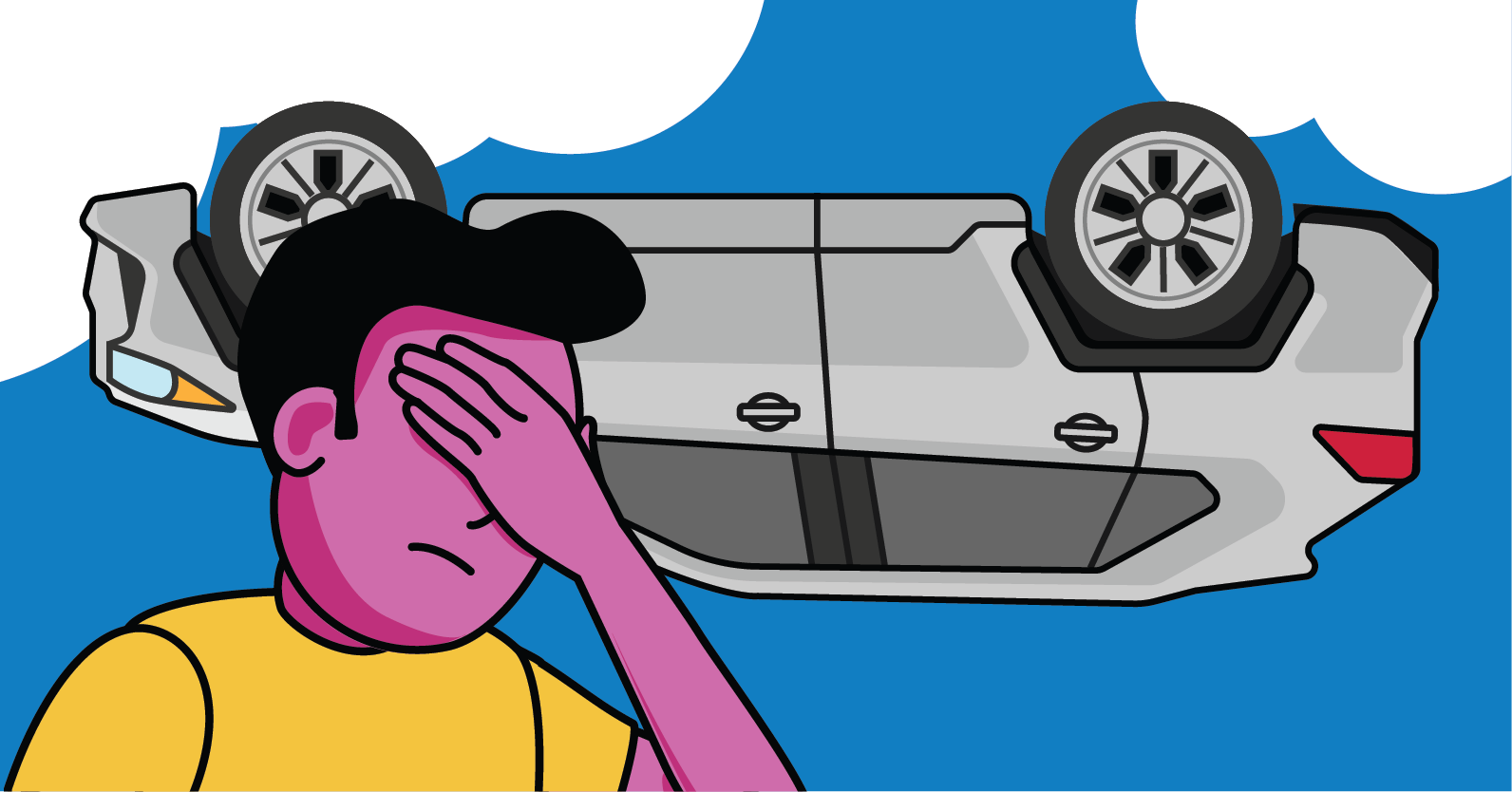
Negative equity is the financial equivalent of quicksand—you’re stuck, and every monthly payment feels like sinking deeper.
But guess what? You’re not alone. According to Edmunds, nearly 40% of financed vehicles are upside-down, meaning people owe more than their car is worth. It happens. And the good news? There are several smart ways to get back on solid ground.
If your upside-down vehicle is a lease, the picture is often better than you think. Across 19,287 lease buyouts Lease End completed in 2025, all 10 of the most popular buyout models carried positive average equity, ranging from $2,397 on a Jeep Wrangler to $7,886 on a Honda CR-V. The average driver captured roughly $5,500 in equity plus about $3,800 in avoided mileage-overage fees. Lessees who assume they are underwater are frequently sitting on hidden equity instead. And if the numbers don't flip in your favor, the buyout is still on the table, that $3,800 in avoided mileage fees doesn't require any equity at all, and neither does keeping a car you already know.. (Read More:
2026 Lease Buyout Report)
1. Refinance Your Loan
If your current interest rate is sky-high,
refinancing could be your ticket to freedom. By securing a lower rate, you could reduce your monthly payment and send more money toward your principal, not just interest.
Why it works:
- A lower APR = less interest = more equity, faster.
- You can choose better terms that fit your current budget.
- Refinancing is often easier if you have good credit or improved income.
Keep in mind: You’ll still have negative equity—but you might manage it more efficiently.
How much a lower rate is really worth: Lease End's 2026 loan data shows average APR falls steeply as credit improves, from 15.60% under a 580 score to 11.34% (fair), 8.15% (good), 6.60% (very good), and 6.23% at 800-plus. On a $25,000 balance over 60 months, moving from a 9% rate to a 4% rate is about $58 a month, or more than $3,400 over the life of the loan. That is real equity you claw back just by requalifying at a better rate.
2. Make Extra Payments
It’s not flashy, but it works. Throwing a little extra cash at your principal each month can speed up your escape from negative equity.
Strategies to try:
- Round up your payments (e.g., $315 becomes $350).
- Make biweekly payments instead of monthly.
- Drop any surprise cash (bonuses, tax returns) on your balance.
Why it helps: You’re shrinking the balance faster than the car depreciates. Slow and steady wins this race.
One reason so many drivers stay upside-down: loan terms keep stretching. Lease End's data shows the average buyout loan term climbed from 70.2 months in 2022 to 72.3 months in 2025, and the current portfolio average sits at 72.7 months. Longer terms mean slower principal paydown, so extra payments do more heavy lifting the longer your term runs.
3. Sell It Yourself (Yes, Even with Negative Equity)
Dealerships often offer less than your car is worth. Selling privately could net you a higher price—and shrink the equity gap.
Here’s how:
- Get a payoff quote from your lender.
- Use sites like Kelley Blue Book or Edmunds to find your car’s market value.
- If your sale price doesn’t cover your loan, be ready to pay the difference at closing.
Pro Tip: Call your lender—they might be able to help with the transaction logistics.
Why your car may be worth more than you expect: Tariffs on imported vehicles have pushed used-car market values up while your original payoff or residual stays fixed, quietly creating surprise equity for many owners, especially on foreign-built models. Before you assume a private sale won't cover your loan, check your car's current market value against your payoff. The gap has been closing (or flipping positive) for a lot of drivers.
4. Trade It In (Cautiously)
You can trade your car in for a new one, but tread carefully. Many dealers will roll the negative equity into your next loan, increasing what you owe and setting you up for a repeat performance.
Better strategy: If you absolutely need a new vehicle, go for one that’s cheaper than your current ride. That way, the new loan might balance out the equity loss without skyrocketing your payment.
Warning: Read the fine print. Make sure the full payoff is included in your trade-in deal.
The trade-in math is worse than it looks right now. With new-vehicle prices averaging around $50,000, a fresh loan resets your depreciation clock. Lease End's 2025 data shows the average lease buyout payment was $563 a month versus $659 for a new lease on a comparable vehicle, roughly $100 a month or $1,200 a year. Trading into a new loan to escape a small equity gap often just buys you a bigger one.
5. Buy Out Your Lease (If You’re Leasing)
Leasing? You might be sitting on a secret equity goldmine. If your leased vehicle is worth more than the buyout price, buying it out and selling it could leave you with a profit, or at least cut your losses. And if it isn't worth more, which is probably why you're here, the buyout can still be the cheaper way out. Turning the car in comes with its own bill: mileage overage, wear and tear, and a disposition fee. If those add up to more than your equity gap, buying the car is the option that loses you less. That's before you count what it's worth to keep driving a car you already know instead of starting over with a stranger's.
Why lease buyouts can be a win:
- You already know this car, how it runs, what it's been through, whether it's ever left you stranded.
- The residual value in your lease agreement is set in stone.
- If market prices have gone up, you might get your car for less than it's worth.
- If you're over your mileage cap, those extra miles cost you at turn-in and cost you nothing on a buyout.
- Lease End can help you buy out your lease without stepping foot in a dealership.
- Once you own it, you can keep it or sell it whenever you want, no need to have a five-year plan today.
Bonus: Even if you're not keeping the car, flipping it could put cash in your pocket or help you break even on your loan.
Which leased cars carry the most hidden equity: In Lease End's 2025 dataset, the top equity performers all averaged over $5,000 in equity at buyout, with the top three being Hondas:
| Vehicle | Average Equity |
| Honda CR-V | $7,950 |
| Honda Accord | $7,378 |
| Honda Civic | $6,850 |
| Toyota Tacoma | $6,598 |
| Mazda CX-5 | $6,242 |
| Subaru Crosstrek | $5,874 |
| Volkswagen Tiguan | $5,739 |
| Honda Pilot | $5,597 |
| Ram 1500 | $5,570 |
| Honda HR-V | $5,403 |
Even electric leases can surprise you. Tesla model-level averages from Lease End show meaningful equity on several models, including about $3,695 on a Model Y, $6,267 on a Model S, and roughly $18,098 on a Cybertruck. If you assumed your
EV lease was underwater, it is worth running the numbers before you walk away.
Buying out also dodges mileage penalties. The average Lease End customer hit 36,954 miles at lease-end in 2025, about 954 over the standard 36,000-mile cap, and overage fees run 10 to 30 cents a mile. High-mileage lessees benefit most: Jeep Wrangler drivers averaged 44,740 miles, roughly 8,740 over the cap, translating to about $2,622 in overage fees avoided simply by buying out instead of returning.
Mileage isn't the only charge that disappears. Turn a leased car in and you're also looking at a disposition fee, plus whatever the inspection finds in wear and tear, curb rash, a windshield chip, tires below the tread minimum. Buy it out and there's no inspection to fail. For plenty of upside-down lessees, that stack of avoided charges is bigger than the gap they were worried about in the first place.
6. Return the Car (Last Resort Only)
If your financial situation is dire, voluntarily surrendering the car is an option—but it's one with serious consequences. You could consider
deferring a payment as a softer option if the financial hardship is temporary.
Why it’s risky:
- Your credit score will take a major hit.
- You’ll still owe the remaining balance after the lender sells the car at auction.
- That balance can be thousands of dollars—plus fees.
Only consider this if no other option is financially or logistically possible.
Before you surrender, know that a buyout loan is more accessible than most people assume. Lease End works with drivers down to a 520 minimum credit score and partners with lenders including
Ally,
Chase,
Capital One, and
TD Bank. For many upside-down lessees, financing the buyout and keeping (or reselling) the car preserves credit far better than a voluntary return, which stays on your record and can leave a deficiency balance of thousands.
7. Stick with the Car and Pay It Off
Sometimes the simplest answer is the best: keep the car and focus on paying down the loan.
When this makes sense:
- Your car’s reliable and doesn’t need costly repairs.
- You can afford to accelerate your payments.
- You’re not in a rush to trade up.
Pro Tip: This path may not be exciting, but it’s often the most financially sound if you’re not desperate to switch rides.
Final Thought: Know Where You Stand
Before you choose your path, get clear on the numbers:
- What’s your current loan balance?
- What’s your car actually worth?
- Can you afford to pay the difference if needed?
- And the one, the numbers can't answer: do you actually want to keep driving this car?
Once you know that, you’ll have a clearer picture of whether to refinance, buy out your lease, or hold tight.
Find out where you stand in minutes, not hours. Lease End calculates a proprietary 0 to 100
Buyout Score from just your VIN, license plate, and email, weighing popularity, reliability, replacement cost, equity, and mileage behavior. Its AI-powered lease buyout calculator returns an instant monthly-payment estimate from minimal input, so you can see what a buyout would actually cost you month to month, and weigh that against everything else the Score measures, before committing to anything.
And if you’re leasing and curious whether a buyout could save (or make) you money? Lease End can help. We handle the title, loan, registration, and all the DMV stuff. You just handle the victory dance.
Lease End has facilitated more than 50,000 lease buyouts since 2021 and unlocked $108 million in equity for drivers in 2025 alone, with total customer savings of $73,155,589 that year. If you are upside-down on a lease, that is exactly the situation this process is built to solve.
Ready to ditch that upside-down car feeling? Let’s get started.