TL;DR (5-minute read): At a lease return inspection, the inspector checks for excess mileage, interior and exterior damage beyond normal wear and tear, missing equipment, and mechanical issues. Across the 19,287 lease buyouts Lease End completed in 2025, the average driver reached lease end with 36,954 miles on the odometer, roughly 954 miles past the standard 36,000-mile cap, and avoided about $3,800 in overage and end-of-lease fees by buying out instead of returning. Mileage overages and wear-and-tear charges are the two most common ways drivers get hit with unexpected end-of-lease fees. The good news: a lease buyout sidesteps the inspection entirely.
If you're approaching the end of your lease, you've probably noticed the inspection looming on your calendar like a dentist appointment you'd rather skip. And honestly? The anxiety makes sense.
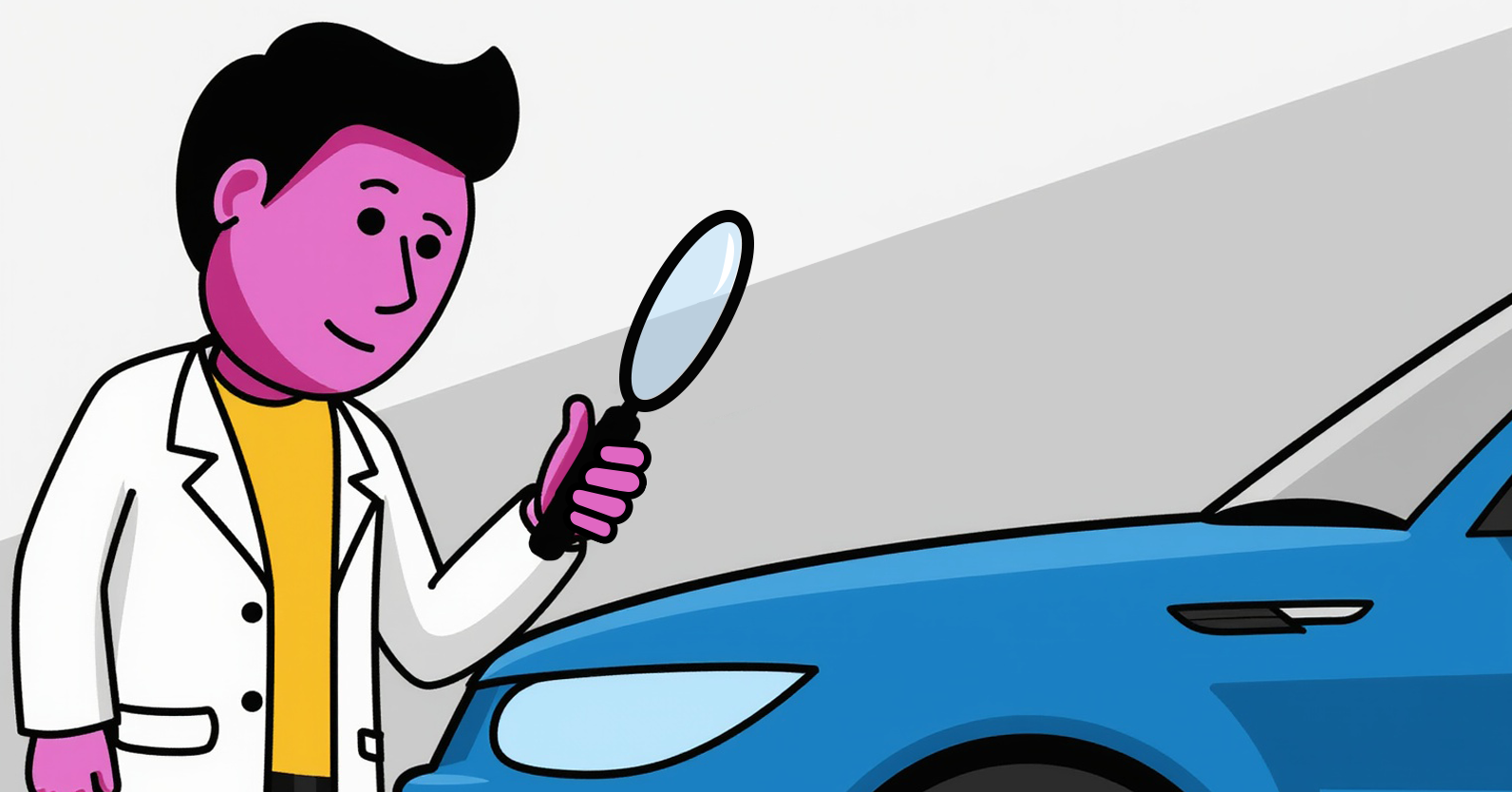
A lease return inspection determines whether you walk away clean or walk away with a bill. The inspector works for the leasing company (or a third party hired by them), and their job is to document every scratch, dent, scuff, and worn-out tire before the car goes back.
Here's what they actually look at, what counts against you, and how a lease buyout with Lease End lets you skip the whole thing.
Table of Contents
What Is a Lease Return Inspection?
TopA lease return inspection is a formal evaluation of your vehicle's condition when you return it at the end of your lease. The leasing company uses it to determine whether you owe any end-of-lease charges beyond what's already covered in your agreement.
Here's who typically conducts it: Many leasing companies send an independent third-party inspector to your home or workplace a few weeks before your lease ends. Companies like AutoVin and SGS are commonly used. You may also be asked to bring the car to the dealership for inspection.
Either way, the inspector uses a standardized checklist from your specific leasing company. Different lessors define "acceptable" differently, so it's worth pulling out your lease contract ahead of time to know exactly what standard applies to you.
What Do Lease Inspectors Actually Check?
TopThe inspection is thorough. Think of it as a pre-owned vehicle assessment done entirely in the interest of the company, not you. Here's what they examine:
1. Mileage
This one is simple: inspectors check the odometer against your contracted mileage limit. Most leases allow 10,000 to 15,000 miles per year. If you've gone over, you'll owe a per-mile overage fee, typically between $0.10 and $0.30 per mile, depending on your lease terms.
Let's say your three-year lease allowed 36,000 miles and you drove 41,000. At $0.20/mile, that's a $1,000 charge. Before you've handed over the keys.
This is not a hypothetical for most drivers.
Lease End's 2026 Annual Lease Buyout Report, built on 19,287 completed buyouts in 2025, found the average vehicle hit lease end at 36,954 miles. That is 954 miles past the standard 36,000-mile cap, which puts the typical driver on the hook for roughly $95 to $286 in overage charges before a single scratch is documented.
Certain vehicles are far worse.
Jeep Wrangler lessees in Lease End's dataset averaged 44,740 miles at lease end, 8,740 miles over the cap. At standard overage rates, that is about $2,622 in fees a Wrangler driver avoids entirely by buying out. Range Rover Velar lessees showed a similar pattern in the prior-year report, exceeding their allowance by more than 8,000 miles on average and facing $800 to $2,400 in fees.
Mileage overages have also been getting worse, not better. Between 2023 and 2024, average overage climbed by roughly 3,000 miles per driver, a shift Lease End attributed to return-to-office mandates pushing commutes back up.
Quick tip: If you're already over your mileage limit, a
lease buyout eliminates mileage overage fees entirely. Once you own the car, the miles don't matter.
2. Exterior Condition
Inspectors go panel by panel on the outside of the car. They check for:
- Dents, dings, and door dings (size and depth matter)
- Paint chips, scratches, and scuffs
- Cracked or broken glass (windshield, mirrors, windows)
- Damaged or missing trim pieces
- Bumper damage from parking lot incidents
- Rust or corrosion
Most leasing companies use a quarter or a credit card as a size guide. If a scratch is longer than a credit card, it's usually flagged. If a dent is larger than a quarter, expect a charge.
3. Interior Condition
Inside the car, inspectors look at:
- Seats: stains, tears, burns, excessive wear on bolsters
- Carpets and floor mats: stains, holes, missing mats
- Headliner: tears, stains, sagging
- Dashboard and trim: cracks, gouges, broken controls
- Odors: smoke, pet odors, or anything requiring professional remediation
Smoke damage is one of the most expensive interior charges a lessee can face. If you or anyone in your household has smoked in the car, factor that into your decision about whether to return or buy out.
4. Tires and Wheels
Tires are checked for tread depth (most lessors require at least 1/8 inch remaining), even wear, and any sidewall damage. Wheels are inspected for curb rash.
If your tires are worn unevenly, that can also signal an alignment issue, which the inspector will note. Replacing four tires yourself before the inspection is almost always cheaper than being charged by the leasing company for the same.
Worth noting: tire wear tracks closely with mileage, and Lease End's data shows the vehicles most likely to be bought out are also the highest-mileage ones. Trucks and SUVs made up 78 percent of all 2025 buyouts (65 percent SUV or crossover, 13 percent truck), and those are the same body styles that burn through tire tread fastest.
5. Mechanical Systems
Inspectors typically run through a basic operational check:
- All lights (headlights, brake lights, turn signals, interior lights)
- HVAC system (heat and A/C)
- Power windows, locks, and mirrors
- Infotainment system and controls
- Horn
They won't do a full mechanical inspection or put the car on a lift, but anything that's visibly broken or non-functional will be noted.
6. Keys, Manuals, and Accessories
This one surprises a lot of people: if you can't return all the keys that came with the car (usually two), or you're missing the owner's manual, floor mats, or other accessories that were part of the original lease, you may be charged for replacements.
Lost a key fob? That can easily run $200 to $500+ to replace, depending on the make and model. Start hunting now.
(Psst. Want to skip the inspection altogether? Try our lease buyout calculator or free lease buyout score today.) The Lease End Buyout Score is a proprietary 0 to 100 rating built from five factors: popularity, reliability, replacement cost, equity, and mileage overage behavior. It takes only your VIN or license plate and an email.)
What Counts as Normal Wear and Tear?
TopHere's where things get subjective. "Normal wear and tear" is the standard buffer every lease gives you, and it's supposed to cover the minor stuff that happens just from driving a car day to day.
Generally, normal wear and tear includes:
- Small scratches and scuffs that can't be felt with your fingernail
- Minor paint chips smaller than a dime
- Light interior wear on high-use surfaces (steering wheel, gear shift, armrest)
- Lightly worn driver's seat fabric or leather
- Windshield chips smaller than a quarter (varies by lessor)
The key word: minor. Anything that falls clearly outside of routine use will likely be flagged.
What Gets Flagged as Excessive?
TopThis is the list you want to avoid:
| What They Find | What It Typically Costs You |
| Dents larger than a quarter | $100-$400+ per dent |
| Paint scratches (deep or long) | $150-$600+ per panel |
| Cracked or chipped windshield | $200-$600+ |
| Interior stains or burns | $100-$500+ |
| Smoke/pet odor remediation | $200-$800+ |
| Curb rash on wheels | $100-$300 per wheel |
| Missing or worn-out tires | $100-$300 per tire |
| Missing keys or accessories | $200-$500+ |
| Mileage overage (per mile) | $0.10-$0.30 per mile |
Estimates vary by vehicle, region, and leasing company. The real problem: you don't get to negotiate these charges on the spot. The inspector documents it; the leasing company bills you.
Where You Live Changes Your Mileage Risk
Mileage overage is not distributed evenly across the country, and Lease End's state-level transaction data shows just how wide the gap gets.
Maine drivers reach lease end at more than 41,000 miles on average, roughly 5,000 miles past a standard cap. A typical Maine driver faces about $1,000 in mileage overage plus a $350 disposition fee, or $1,350 in return costs, against $310 in positive equity from buying out. That is a net swing of more than $1,600 in favor of the buyout before any wear-and-tear charges are added.
Arkansas drivers put on 14,000 to 15,000 miles a year, well above the typical 12,000-mile allowance, meaning overage is close to automatic on a three-year lease.
Washington runs the opposite direction. The average Washington driver reaches lease end at 32,768 miles, more than 3,200 miles under the cap, so mileage is rarely the deciding factor there. For Washington lessees, the inspection risk is concentrated in wear and tear rather than the odometer.
How Much Do Lease Return Fees Cost?
TopLease End's 2025 transaction data puts a real number on this. Across 19,287 completed buyouts, the average driver avoided roughly $3,800 in overage and end-of-lease fees by buying the car instead of returning it. Combined with an average of about $5,500 in captured equity, Lease End customers held onto $73,155,589 in total savings in 2025.
Based on lease transactions processed at Lease End, mileage overages and wear-and-tear charges are the two most common sources of unexpected end-of-lease costs. It's not unusual for drivers to receive a bill for $1,000 to $3,000 in charges after returning a car, particularly if they drove more miles than expected or had a minor accident during the lease.
Add a
lease disposition fee (typically $300-$500) to the mix, and returning a car can get expensive fast. These fees exist whether or not you were planning for them.
How to Prepare for Your Lease Return Inspection
TopIf you've decided to return your car, here's how to walk into the inspection with your eyes open:
- Get a pre-inspection first. Many leasing companies offer a free pre-inspection before the official one. Take it. You'll find out what's flagged while you still have time to fix things yourself.
- Fix small damage yourself. A touch-up paint pen, a DIY dent removal kit, or a quick trip to an independent body shop will almost always cost less than paying the leasing company's contractors to handle it.
- Replace tires if needed. Get a tread depth gauge at any auto parts store (they're a few dollars). If you're under 4/32 inch, consider replacing before the inspection.
- Deep clean the interior. Professional detailing is typically $100-$200. If your interior has stains, it's worth it to avoid a much larger remediation charge.
- Locate all keys, manuals, and accessories. Start looking now, not the week of the inspection.
- Document everything. Take dated photos and video of every panel, inside and out, before handing over the keys. If there's a dispute later, you'll want evidence.
- Run your buyout numbers before you book the inspection. Lease End data shows all 10 of the most popular buyout models in 2025 carried positive average equity, ranging from $2,397 on the Jeep Wrangler to $7,886 on the Honda CR-V. If your car is on that list, the money you are about to spend on detailing and tires may be better spent on a down payment.
The Alternative: Skip the Inspection With a Lease Buyout
TopHere's the thing nobody tells you clearly enough: if you buy out your lease, there is no inspection.
When you purchase your car through a lease buyout, you're buying it as-is. Every dent, every mile, every worn-out seat cushion becomes your problem, not a fee on the leasing company's invoice. That's actually a good thing.
And if your car has
positive equity (meaning the market value is higher than your buyout price), you're even further ahead. You keep that equity instead of handing the car back so the dealer can profit from it.
What Drivers Actually Keep Instead of Paying Fees
The equity side of this is not theoretical. Here is what the ten highest-equity models in Lease End's 2025 dataset averaged at buyout, drawn from an analysis of more than 18,000 transactions:
| Vehicle | Average Equity | Avg. New Monthly Payment |
| Honda CR-V | $7,950 | $470 |
| Honda Accord | $7,378 | $461 |
| Honda Civic | $6,850 | $417 |
| Toyota Tacoma | $6,598 | $596 |
| Mazda CX-5 | $6,242 | $443 |
| Subaru Crosstrek | $5,874 | $420 |
| Volkswagen Tiguan | $5,739 | $433 |
| Honda Pilot | $5,597 | $583 |
| Ram 1500 | $5,570 | $666 |
| Honda HR-V | $5,403 | $405 |
Every model on that list averaged more than $5,000 in equity. Put next to a typical inspection bill, the comparison is not close: returning the car means paying the fees and forfeiting the equity in the same transaction.
Lease End handles lease buyouts 100% online. You fill out a form, review your financing options through partners like
Ally Financial,
Capital One,
TD Bank, or
JPMorgan Chase, eSign your documents, and we handle the title transfer and registration. No dealership visit. No DMV trip. No inspection anxiety.
For context on what that financing looks like right now: Lease End's May 2026 portfolio averaged a $576.37 monthly payment, $31,874 financed, and a 72.7-month term, with a blended APR of 9.05 percent across the full credit spectrum. Early 2026 rates have dipped to about 9.03 percent, the most favorable financing conditions in over a year.
Lease End works with credit scores as low as 520.
Use the
Lease Buyout Calculator to see what your monthly payment would look like, or call
(844) 902-2842 to talk through your options with a buyout advisor.
Return vs. Buyout: A Quick Comparison
| Returning the Car | Buying Out with Lease End |
| Inspection required? | Yes | No |
| Mileage overage fees? | Yes | No |
| Wear-and-tear charges? | Possible | No |
| Disposition fee? | Often yes ($300-$500) | No |
| Keep your equity? | No | Yes |
| DMV trip required? | Possibly | No, we handle it |
| Typical dollar outcome (2025 Lease End data) | Overage plus disposition fees owed | ~$5,500 equity kept plus ~$3,800 fees avoided |
Final Thoughts
TopA lease return inspection isn't something to fear, but it is something to prepare for. Know what they check, know what your lease says about wear and tear, and start addressing any obvious issues a few weeks out.
And if the inspection feels like one more thing to stress about on top of an already complicated process, remember: you always have the option to skip it entirely.
Lease End has facilitated more than 50,000 lease buyouts since 2021, including 19,287 in 2025 alone, and unlocked $108 million in equity for drivers last year. Skipping the inspection is not a fringe move. It is what tens of thousands of drivers already chose.
Lease End makes the buyout process simple, online, and free. No doc fees. No dealership pressure. No inspection nerves. Just you, your car, and a monthly payment you can plan around.
Fill out the form below with your VIN or license plate number to get started, or call
(844) 902-2842 to speak with a buyout advisor today.
Lease End: The Best Loans to Go from Leased to Owned.
Frequently Asked Questions
TopCan I fail a lease return inspection?
There's no pass/fail in the traditional sense. The inspection documents your vehicle's condition, and the leasing company uses that report to bill you for any damage or overages that exceed the normal wear-and-tear standard. You'll receive an itemized list of charges after the car has been returned.
Who pays for the lease return inspection?
In most cases, the leasing company or a third-party inspection service covers the cost of the inspection itself. What you pay for are any charges the inspector identifies, such as mileage overages, excess wear, or missing equipment.
What happens if I disagree with the inspection results?
You can dispute charges with the leasing company. This is where your own documentation, photos, videos, and any pre-inspection reports, becomes valuable. Disputes can sometimes be resolved, but success is not guaranteed.
How long do I have after the inspection to pay lease return fees?
Most leasing companies send the final bill within a few weeks of the return and give you 30 to 60 days to pay. Check your original lease agreement for the exact timeline and any late-payment terms.
Do I have to get the inspection done at the dealership?
Not always. Many leasing companies use mobile inspection services that come to your home or workplace. Contact your leasing company a few weeks before your lease ends to confirm the inspection process and schedule your pre-inspection if one is available.
Can I avoid lease return fees by doing a lease buyout?
Yes. When you buy out your lease through Lease End, there's no return inspection and no end-of-lease charges for mileage overages or wear and tear. You purchase the car at your pre-agreed
residual value and the car is yours. Any cosmetic condition is now just your car doing its thing.
Is a lease buyout always cheaper than returning the car?
Not always, and we'd never tell you otherwise.
- If your car has significant negative equity (the market value is much less than your residual), returning might be the smarter financial move.
- But if you're facing significant inspection charges, love the car, and want to keep driving it, the buyout math often works in your favor.