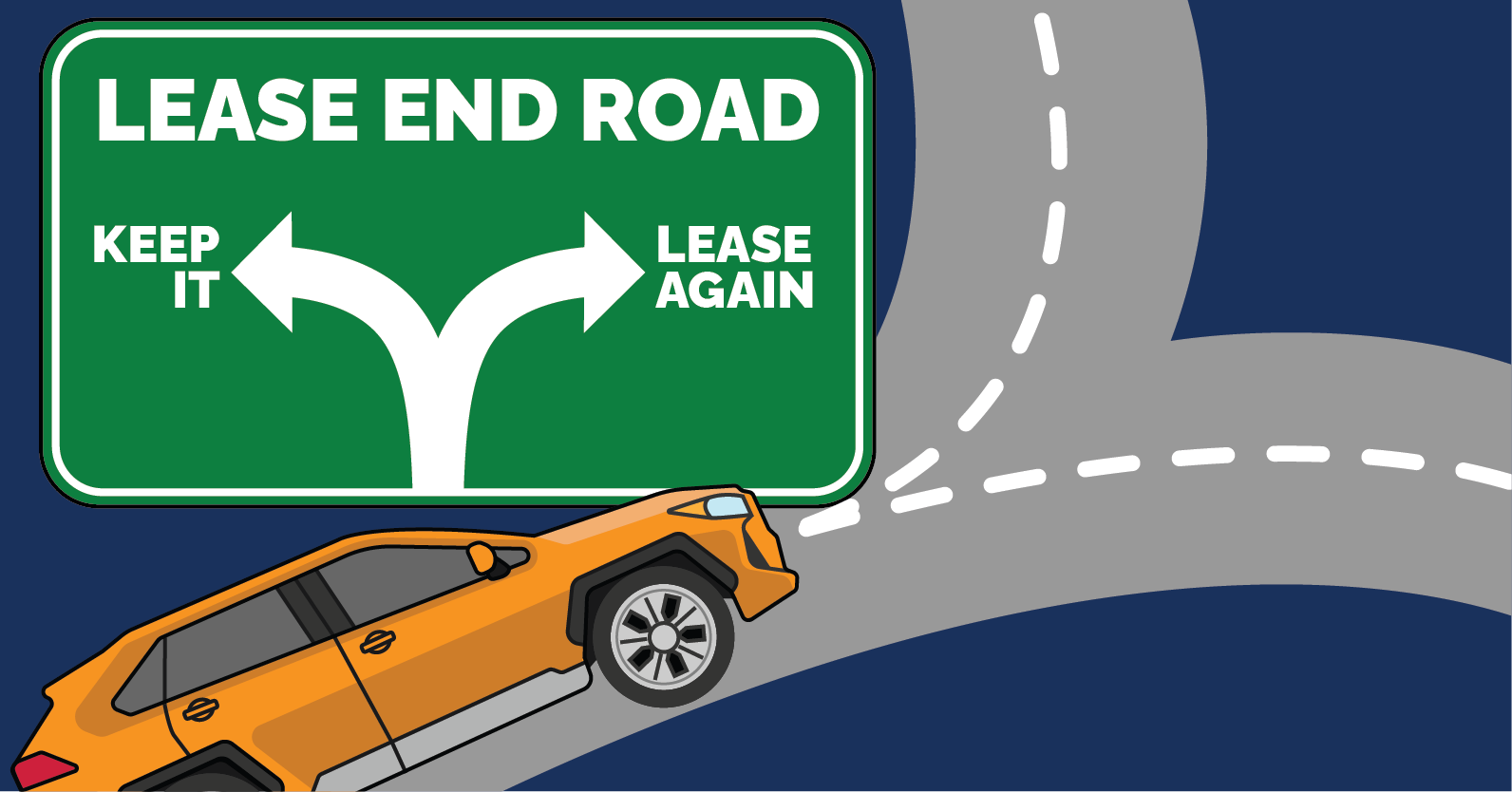
TL;DR (8-minute read): When a car lease ends, you typically have three options: return the vehicle, lease or buy a different car, or buy out your current lease, and each path has financial tradeoffs.
- In 2025, Lease End customers captured more than $73 million in total savings across 19,287 completed lease buyouts.
- The average driver who bought out walked away with roughly $5,500 in equity plus about $3,800 in avoided overage fees.
- All 10 of the most popular buyout vehicles in 2025 carried positive average equity, which means returning the car is often the costlier choice.
If your lease is ending soon, it's time to look at your options. Sometimes people think you have to turn in your leased car to the dealership, but the truth is, you have several routes you can take.
You are not trapped. You are not required to start over. You are not automatically obligated to hand over the keys and begin a brand new payment.
At the end of your lease, you generally have three options:
- Return the vehicle
- Lease or purchase a different vehicle
- Buy out your current lease
The confusion usually comes from not knowing how to evaluate those choices. So let’s break each one down clearly and talk through what to do after your car lease ends.
Option One: What Happens When a Car Lease Ends and You Return It
Returning the vehicle is a pretty straightforward process, with some complications in the details. You schedule an inspection, bring the car back to the dealership or leasing company, and complete the turn-in process.
Before returning it, your vehicle will typically go through a pre-return inspection. This looks for excess wear and tear, dents, windshield damage, tire condition, and mileage overages. If you drove more miles than your lease allowed, you may owe a per-mile fee. If there is damage beyond normal wear, you may owe repair costs.
You may also be charged a disposition fee. This is a fee written into many lease contracts to cover the administrative cost of reselling the vehicle.
These fees are not hypothetical. In 2025, the average Lease End customer turned in at 36,954 miles, which is about 954 miles over the standard 36,000-mile cap. With overage fees ranging from 10 to 30 cents per mile, a typical driver faces up to $300 at turn-in before any disposition fee is added. High-mileage vehicles get hit much harder: Jeep Wrangler lessees averaged 44,740 miles, roughly 8,740 over the cap, which translates to about $2,622 in overage fees that a buyout would avoid entirely.
For some drivers, returning the car is the right move. If the vehicle no longer fits your needs, if the buyout price is high compared to market value, or if you simply want something new, this option provides a clean break.
However, before turning it in, it is wise to understand the next option.
Option Two: What to Do After Car Lease Ends If You Want a Different Vehicle
Many drivers assume that what happens when a car lease ends is they simply start another lease.
You can lease a new vehicle. You can purchase a new vehicle. You can finance something entirely different. Your lease ending does not obligate you to stay with the same brand or dealership.
The key thing to understand is this: the car market today may look very different than when you first signed your lease. Interest rates, vehicle prices, and incentives shift over time.
Here is what that shift looks like in real terms. In 2025, the average lease buyout monthly payment was $563, compared to $659 for a new lease on a comparable vehicle. That is roughly $100 a month, or about $1,200 a year, that drivers save by keeping the car they already have instead of signing into a fresh contract at today's prices, which now average around $50,000 for a new vehicle.
This is why reviewing your current vehicle’s buyout price and buyout quality before jumping into a new contract is important.
If you want an
instant buyout score, try Lease End's. It will help you understand what you should consider in buying out your specific vehicle and help you decide if it's the right choice for you.
Option Three: What Happens When a Car Lease Ends If You Buy It Out
Now we get to the option that surprises many drivers.
When you signed your lease, your contract included a
residual value. This is the predetermined value of your vehicle at the end of the lease term. It is written into your agreement.
That residual value is the foundation for your lease buyout price.
If you choose to buy out your lease, you purchase the vehicle for that residual amount, plus applicable taxes and fees.
The important detail here is that the residual value was calculated years ago. It does not adjust based on today’s market conditions.
So if your vehicle is currently worth more than the buyout price, you may have positive equity.
This is not a rare outcome. Across Lease End's 2025 data, every one of the 10 most popular buyout vehicles carried positive average equity, ranging from about $2,400 on a Jeep Wrangler up to nearly $7,900 on a Honda CR-V. A few standouts:
| Vehicle | Average Equity at Buyout | Avg. New Loan Payment |
| Honda CR-V | $7,950 | $470 |
| Honda Accord | $7,378 | $461 |
| Honda Civic | $6,850 | $417 |
| Toyota Tacoma | $6,598 | $596 |
| Mazda CX-5 | $6,242 | $443 |
Source: Lease End proprietary analysis of more than 18,000 lease buyouts in 2025. Equity figures are averages and vary by mileage, condition, and region.
This is why many drivers start searching phrases like what to do after car lease ends or should you buy out your lease.
At Lease End, this is where we help drivers pause and run the numbers before making a decision. You can read more about how this works in our guides:
How to Evaluate What to Do After Car Lease Ends
Before making any decision, here are five smart steps to take:
1. Review Your Lease Contract
Look at your residual value and confirm your buyout amount.
2. Check Your Vehicle’s Current Market Value
Compare similar vehicles with similar mileage in your area.
3. Consider Your Mileage and Wear
If you are over your mileage allowance, buying out your lease may eliminate per-mile penalties.
4. Review Your Financial Situation
Consider whether a lease buyout loan fits comfortably within your monthly budget. If you need to know more about what your new monthly payment would look like, call Lease End, and we can instantly get you loan offers and monthly payment amounts.
5. Run the Numbers Before Walking Into a Dealership
This is where many drivers lose leverage. Information equals clarity.
Where you live matters too.
Lease buyout rates and taxes vary widely by state. In Lease End's data, average APRs run from a low of 7.96% in
Idaho to a high of 11.29% in
Oklahoma, and that spread alone can mean more than $3,000 in additional interest over a $30,000, 72-month loan. Before you decide, check Lease End's guide for your state to see local average APRs, equity, and tax treatment.
Lease End offers educational resources in our
Learning Center that walk through these scenarios in more depth. We built tools and guides because we saw how often drivers felt rushed into decisions at lease end.
The Role of Financing in What Happens When a Car Lease Ends
Most people do not write a check for their lease buyout. They finance it.
A lease buyout loan allows you to convert your lease into traditional ownership.
Your rate depends on factors like credit profile, vehicle age, mileage, and loan term. The price of the vehicle itself is already set in your lease contract, so the financial strategy shifts toward comparing lenders rather than negotiating vehicle price.
Credit profile is usually the biggest driver of your rate. As of May 2026, Lease End's portfolio averages by credit tier looked like this:
| Credit Score | Average APR |
| 800+ | 6.17% |
| 740 to 799 | 6.59% |
| 670 to 739 | 8.10% |
| 580 to 669 | 11.25% |
| Under 580 | 15.61% |
Source: Lease End live portfolio averages, May 2026. The minimum qualifying credit score Lease End works with is 520. Overall average APR across all credit profiles was about 9.05% in 2026 year to date.
Lease End specializes in helping drivers compare loan options so they can move from leased to owned efficiently. That is part of what makes our process different.
Lease End works with trusted lending partners including
Ally,
Chase,
Capital One, and
TD Bank to source competing offers, so drivers see real rates rather than a single take-it-or-leave-it number.
To Recap: When Buying Out Your Lease Makes Sense
A lease buyout may make sense if:
- Your vehicle’s market value exceeds your buyout price
- You like the car and it fits your needs
- You are over mileage and want to avoid penalties
- Replacing the vehicle would significantly increase your payment
- The vehicle has strong reliability and maintenance history
Keeping a vehicle you already understand can remove uncertainty. There is value in familiarity.
When Returning the Vehicle Makes More Sense
Buying out your lease is not always the right answer.
Returning the car may be smarter if:
- The buyout price is higher than market value
- The vehicle has upcoming major maintenance costs
- Financing terms stretch your budget
- Your needs have changed significantly
At Lease End, we believe clarity is more important than pushing one outcome. The goal is making a decision that aligns with your finances and long-term plans.
What Happens When a Car Lease Ends and You Feel Unsure
If you feel unsure about what to do after your car lease ends, that is normal.
Most drivers only experience lease end every few years. It is not something you practice regularly.
This is exactly why Lease End exists.
We built our platform around simplifying the lease buyout process. Our proprietary
Lease End Buyout Score helps drivers evaluate whether buying out their lease makes sense based on multiple factors. Our team works directly with drivers to compare financing options and handle the paperwork required to complete a buyout.
The Lease End Buyout Score is a proprietary 0 to 100 rating built from five factors: popularity, reliability, replacement cost, equity, and how the vehicle has been driven. It is calculated from just your VIN, license plate, and email, so you can get a read on whether a buyout makes sense in under a minute, without a credit pull or a dealership visit.
Final Thoughts on What Happens When a Car Lease Ends
So, what are your options at the end of your lease?
- You can return the vehicle.
- You can start over.
- Or you can buy out your lease and keep the car you already know.
The smartest move is not rushing into any of those options. It is reviewing your buyout amount, understanding your vehicle’s value, and exploring your financing choices before committing.
Lease End has facilitated more than 60,000 lease buyouts (and counting) since 2021 and helped drivers capture over $73 million in savings in 2025 alone. If you would rather not run the numbers on your own, that experience is what we bring to your buyout.